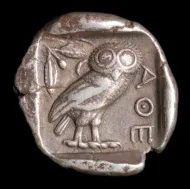
The John Max Wulfing Collection at Washington University in Saint Louis comprises an outstanding assemblage of c. 16,000 ancient Greek, Roman, and Byzantine coins along with many other items that span the world’s monetary history.
Latin Labs is a research group focused on Latin language, literature, and culture. Their mission is to explore the intersections of classical studies with modern approaches, including digital humanities, linguistics, and cultural analysis.
The Amheida project began at Columbia University in 2001 and has been primarily sponsored by New York University since 2008, with Columbia remaining a partner. In 2022, Washington University in St. Louis joined as a collaborator. The project is part of the broader Dakhleh Oasis Project, an international initiative studying human-environment interactions in the oasis over thousands of years. Amheida itself contains archaeological remains spanning nearly three millennia, including paleolithic material.
Excavations have focused on four key areas: a fourth-century AD elite house with wall paintings and an adjoining school over a Roman bath complex; a third-century modest house; the temple hill with remains of the Temple of Thoth and earlier structures; and a fourth-century funerary church. Conservation efforts have restored Roman-period funerary monuments and created protective structures for decorated temple blocks. A reconstructed fourth-century house near the site entrance is planned as a visitor center.
In 2022, the leadership of the project passed from Prof. Roger Bagnall as director and Prof. Paola Davoli as archaeological director to Dr. David M. Ratzan (ISAW/NYU, director) and Prof. Nicola Aravecchia (Washginton University in St. Louis, archaeological director)
This database contains images associated with the music of ancient Greece and Rome and other images connected with Greco-Roman antiquity. It also includes images of ancient and modern instruments, places, and objects related to the ancient Greco-Roman world more broadly and some recordings of ancient Greek and Roman literature read aloud. Project director: Tim Moore, John and Penelope Biggs Distinguished Professor of Classics.
This is a database of all metrical units (passages in an individual meter) in the extant plays of Plautus and Terence except for the fragmentary Vidularia.
Papyri.info has two primary components. The Papyrological Navigator (PN) supports searching, browsing, and aggregation of ancient papyrological documents and related materials; the Papyrological Editor (PE) enables multi-author, version controlled, peer reviewed scholarly curation of papyrological texts, translations, commentary, scholarly metadata, institutional catalog records, bibliography, and images.
Papyri.info aggregates material from the Advanced Papyrological Information System (APIS), Duke Databank of Documentary Papyri (DDbDP), Heidelberger Gesamtverzeichnis der griechischen Papyrusurkunden Ägyptens (HGV), Bibliographie Papyrologique (BP), and depends on close collaboration with Trismegistos, for rigorous maintenance of relationship mapping and unique identifiers.
A supplement Carl Conrad, faculty emeritus, wrote for the beginning Greek textbook, Reading Greek.