
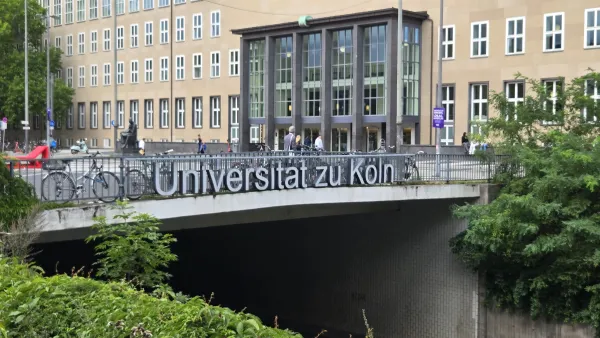
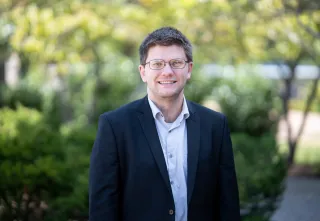
Classics MA student William Sieving recently participated in the 31st International Congress of Papyrology in Cologne, Germany, an experience he describes as “transformative as a scholar.”
Held every three years, the congress brings together papyrologists from around the world to share new discoveries, exchange ideas, and strengthen international collaboration in the field. With Washington University’s own papyrus collection contributing to this global network of research, Sieving found the gathering to be a unique opportunity to engage with both established and emerging scholarship.
Throughout the week, he attended sessions that shaped the direction of his own research, including panels on the publication of illegal papyri, newly unwrapped literary papyri from Herculaneum, and advances in understanding Arabic papyri. “For the first time, I was able to discuss Arabic papyri with scholars specializing in the subject as well as talk about the topic of my thesis with the relevant specialists,” Sieving said.
Equally significant were the professional connections Sieving made with colleagues across Europe and beyond. These relationships, he noted, will be especially valuable as he prepares applications for PhD programs.
“I am forever grateful to the Kevin Herbert Memorial Fund for providing me with this opportunity,” Sieving added.


