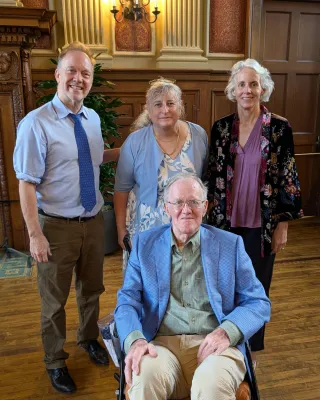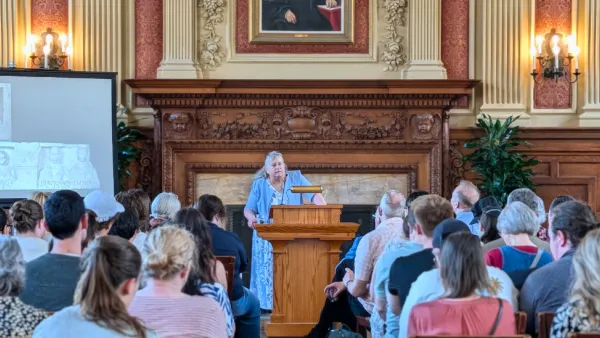
From March 23–26, the John and Penelope Biggs Department of Classics hosted a vibrant and intellectually invigorating Biggs Family Residency in Classics with Elizabeth Meyer, whose visit drew standing-room-only crowds, lively discussion, and enthusiastic engagement across the WashU classics community.
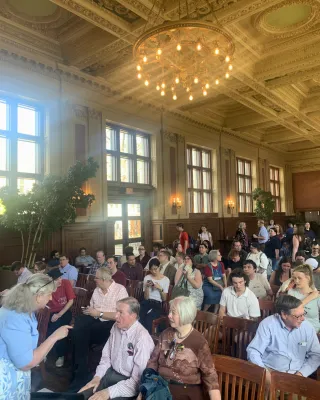
Over the course of four packed days, Professor Meyer—an internationally respected historian of the Greek world and an exceptionally engaging teacher and conversationalist—joined faculty, graduate students, and undergraduate students for a colloquium, seminar, public lecture, and a special panel discussion. Each event reflected the collaborative spirit and scholarly curiosity that define the Biggs Family Residency.
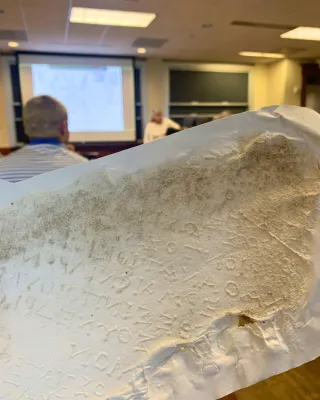
The residency opened with a colloquium, which took attendees inside Professor Meyer’s research process as she reconstructs ancient social history through close attention to Greek sanctuary monuments. Focusing on enigmatic manumission inscriptions—texts that simultaneously document the release of enslaved individuals from human ownership while placing them under the protection and authority of a god—Professor Meyer demonstrated how material evidence, epigraphy, and historical imagination come together to illuminate the lived realities of the ancient world. The discussion that followed underscored her talent for inviting audiences into complex methodological questions with clarity and generosity.
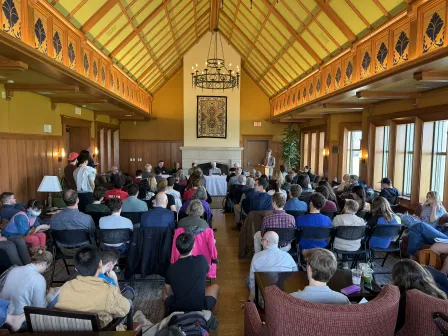
In addition to her scheduled events, Professor Meyer graciously agreed to participate in a special panel, Ancient Worlds: Conversations with Leading Historians, adding yet another opportunity for dialogue to an already full week. The panel brought together students and faculty to reflect on historical practice, interdisciplinary approaches, and the evolving questions that animate the study of the ancient Mediterranean.
Beyond the formal programming, Professor Meyer spent generous amounts of time meeting with faculty, graduate students, and undergraduate majors, reinforcing one of the core aims of the Biggs Family Residency: sustained intellectual exchange across ranks and research areas. Conversations continued in hallways, offices, and informal gatherings, leaving a lasting impression well beyond the final day of her visit.
With its strong attendance, rich discussion, and visible sense of community, the 2026 Biggs Family Residency in Classics was a resounding success. Professor Meyer’s presence reminded us of the power of careful historical work—and open scholarly conversation—to bring the ancient world vividly into the present. The department is deeply grateful to the Biggs family for their continued support and to Professor Meyer for an unforgettable week of learning and exchange.