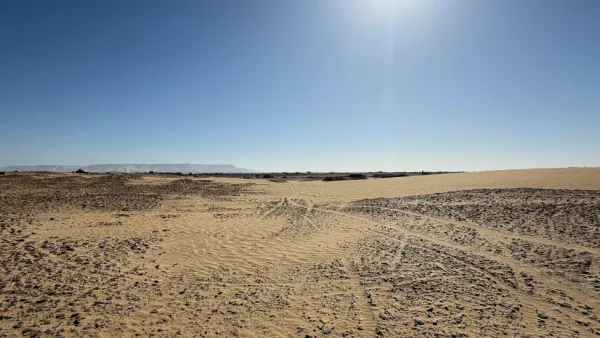
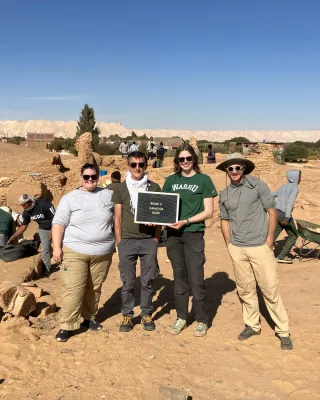
This January, Associate Professor Nicola Aravecchia has been sending back striking photos and updates from the archaeological excavation at Amheida in Egypt’s Dakhla Oasis, where four graduate students from the Departments of Classics and Art History & Archaeology have joined the field team. Their work contributes to an internationally recognized project that continues to reshape scholarly understanding of life in Egypt’s Western Desert during the Roman and early Christian periods.
On‑Site With WashU Students
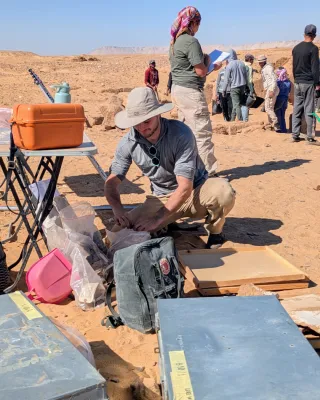
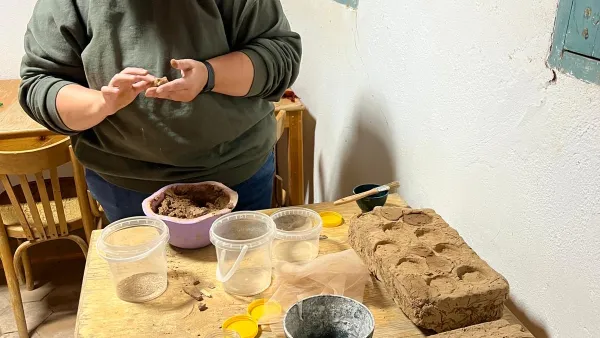
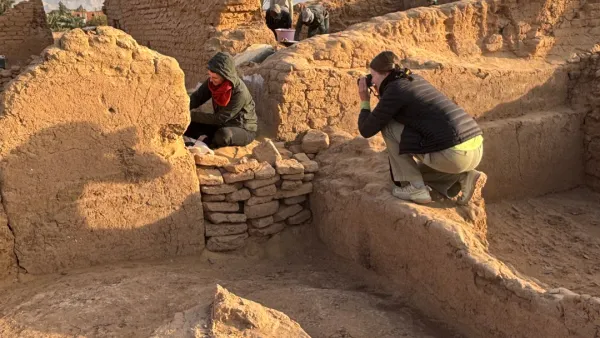
Professor Aravecchia, who serves as Archaeological Field Director at Amheida, has led several successful field seasons at the site. His team this year includes four WashU graduate students who are gaining hands‑on experience in archaeological field methodology, artifact analysis, and cultural heritage documentation. The group’s work spans excavation, architectural recording, pottery study, and digital documentation — all essential components of a major archaeological campaign.
Aravecchia’s recent field seasons have been remarkably productive. In 2023, for example, his team uncovered significant burials and Greek‑inscribed ostraka and made substantial progress in investigating the fourth‑century church complex at the site. His ongoing leadership at Amheida continues to open research opportunities for WashU graduate students across disciplines.
Amheida: A Unique Window Into Egypt’s Western Desert
The site of Amheida — known in antiquity as Trimithis — is one of the most intact and informative archaeological landscapes in Egypt’s Western Desert. Located in the Dakhla Oasis, Amheida preserves an extraordinary range of evidence from the Pharaonic through Late Antique periods, with its most significant remains dating to the Roman and early Christian eras.
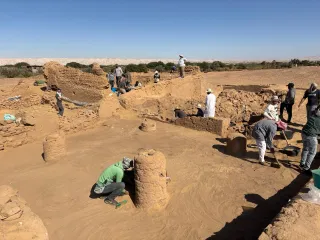
Archaeological work at Amheida has revealed:
- A remarkably preserved urban center, once a major settlement of the oasis during the Roman and Byzantine centuries.
- Evidence of a diverse cultural environment, where Greek, Roman, Egyptian, and local traditions intermixed in daily life.
- A fourth‑century Christian church—one of the earliest discovered in Egypt—whose basilica plan sheds light on the spread of early Christian architectural and artistic forms.
- Residential areas decorated with elaborate wall paintings, a Roman‑style bath, a school with Greek rhetorical exercises, and other features attesting to a vibrant Greco‑Roman cultural presence.
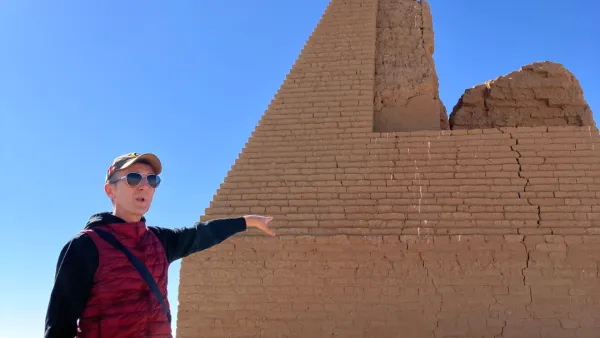
- A standing brick pyramid, cemeteries, and multiple yet‑unexcavated zones offering potential for future discoveries.
Amheida’s long history of research includes its identification during the Dakhla Oasis Project survey in the late 1970s and major excavations beginning in 2000 under Roger Bagnall, with current work sponsored by New York University’s Institute for the Study of the Ancient World.
WashU’s Role in an International Effort
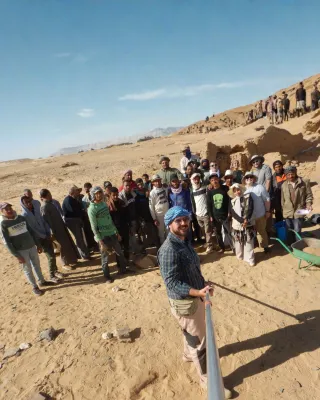
WashU graduate students’ participation reflects the project’s collaborative, interdisciplinary nature. Teams at Amheida regularly include ceramicists, zooarchaeologists, physical anthropologists, papyrologists, architectural specialists, and students from institutions around the world. Fieldwork takes place during the cooler months, from late December through early February.
For WashU students, the opportunity to join Professor Aravecchia in the field offers unparalleled professional training. They contribute to excavations, documentation, and analysis while working side‑by‑side with international experts — experiences that shape future academic careers in Classics, archaeology, and ancient history.
Looking Ahead
As the team continues its January field season, the WashU community eagerly awaits more updates from the desert. Professor Aravecchia’s photos and reports highlight not only the significance of the discoveries but also the profound educational value of participating in an active archaeological dig at one of Egypt’s most important ancient sites.
Further updates will be shared as the season progresses.