
Assistant Professor Chris Erdman spent the summer in Italy advancing his book project on legislative voting in the late Roman Republic, supported by a Penelope Biggs Travel Award. His research combined study at the American Academy in Rome’s library with fieldwork at archaeological sites across Italy, focusing on how Latin colonies and non-Roman towns developed their own legislative institutions in dialogue with, but distinct from, those of Rome.
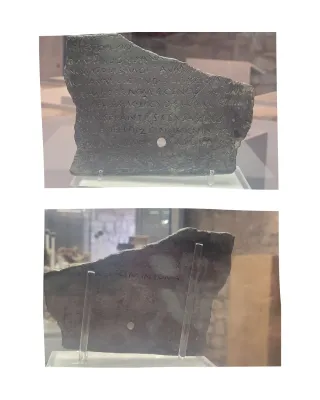
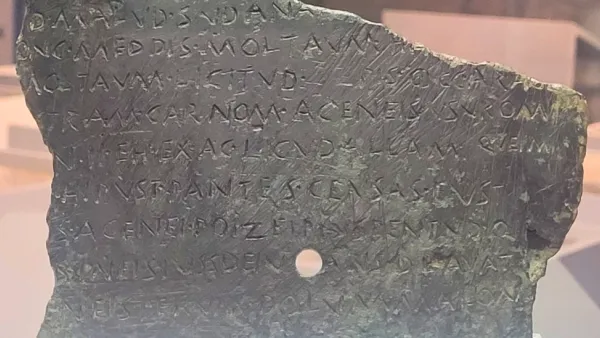
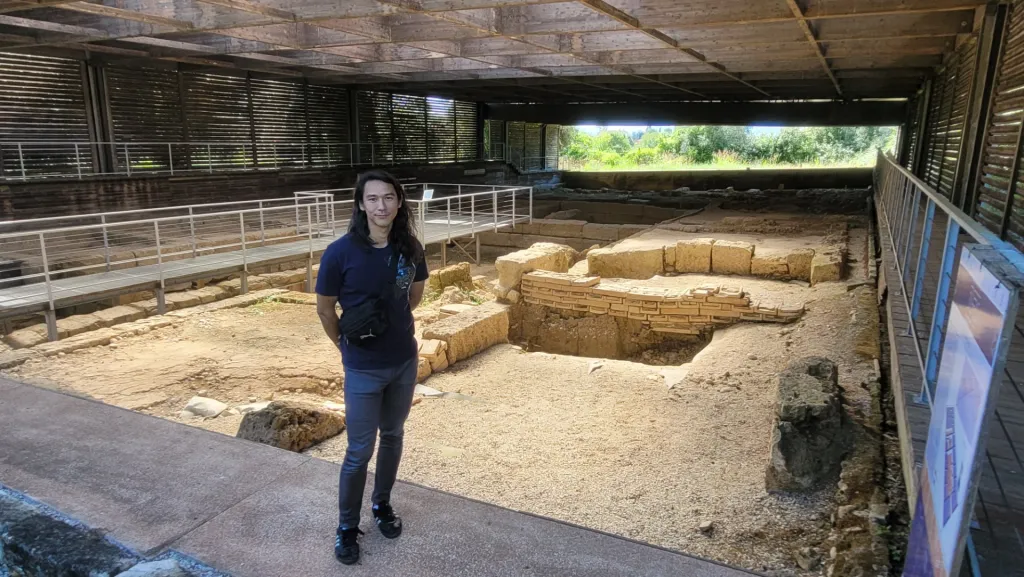
At the Latin colony of Fregellae—founded in 328 BC and destroyed by Rome in 125 BC—Erdman examined the remains of civic spaces that preserve a rare glimpse into political life before the Augustan era. In Venusia, he investigated inscriptions that may record local voting units and studied a fragment of the Tabula Bantina, a bilingual bronze tablet inscribed in both Latin and Oscan. These materials provide crucial evidence for Erdman’s argument that Italian communities like Bantia possessed their own longstanding traditions of participatory lawmaking, rather than merely imitating Roman models.
Erdman’s findings contribute to a richer understanding of the diverse political cultures of Republican Italy and the ways in which local practices intersected with Roman institutions.


